
- 26 Sep 2026
GLASS Writeboard: A Professional Guide to Glass Material Selection
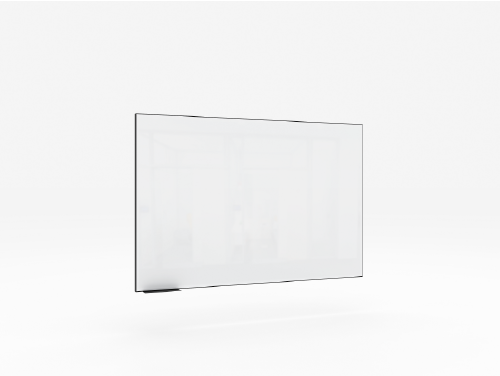
When specification professionals ask about glass whiteboards, the question is rarely about aesthetics — it's about which glass. That question sounds simple on the surface, but it branches into substrate composition, manufacturing process, surface treatment, and application environment. Get the material wrong, and you're either overpaying or replacing the board in under three years.
This guide cuts through the marketing language and addresses glass material selection for GLASS writeboard applications directly.
Understanding the Glass: It's Not Regular Glass
Most commodity whiteboards use standard float glass — the flat, uniform sheets you'd recognize from basic construction. The problem is elevated iron content in float glass, which produces a subtle green tint when you look through it against a white surface. Over time, ghosting develops: marker residue that won't fully erase, leaving a faint imprint of previous writing.
Premium glass writeboards use low-iron ultra-clear glass. The principle is straightforward — iron oxide (Fe₂O₃) content is reduced to below 150 parts per million. Standard float glass typically ranges from 500–1,500 ppm. That reduction pushes light transmittance from approximately 86% to above 92%.
"Ultra-clear glass is the crystal prince of the glass family." While that's colorful language, the optical performance difference is real and measurable. Hold a sheet of ultra-clear glass next to standard float glass against a light source, and the clarity gap is unmistakable.
Material Comparison: Four Options Ranked
| Dimension | Painted Steel | Porcelain Steel | Glass (Tempered) | Ultra-Clear Glass |
|---|---|---|---|---|
| Durability | Good | Excellent | Excellent | Excellent |
| Writing Feel | Average | Smooth | Silky | Silky |
| Ghost Resistance | Fails | Nearly None | None | None |
| Magnetic | Yes | Yes | Optional | Optional |
| Price | Low | High | Mid-High | High |
| Lifespan | 3–5 years | 10+ years | Lifetime | Lifetime |
| Weight | Light | Heavy | Heavy | Heaviest |
| Reflectivity | None | Minimal | Present | Noticeable |
These four materials span the full spectrum from entry-level to premium. The right choice depends on three variables: usage frequency, required lifespan, and budget constraints.
Painted Steel: Functional but Temporary
Painted steel whiteboards are the most common type found in factories, schools, and training facilities. The substrate is typically galvanized or cold-rolled steel coated with a specialized paint layer. Writing and erasing work adequately, and magnetic mounting is supported.
The fundamental weakness is color fade over time. Marker pigment gradually penetrates the coating pores and cannot be fully removed. As the surface dulls to a grayish-white, the board looks tired. Scratches compound the problem, and visual appeal deteriorates quickly.
If you're taking occasional meeting notes, painted steel serves the purpose. For daily heavy-use environments or spaces where appearance matters, skip this option.
Porcelain Steel: The Middle Ground (with Caveats)
Porcelain whiteboards bridge the gap between painted steel and glass. Imported porcelain surfaces offer excellent scratch and wear resistance — significantly longer lifespan than painted steel — with minimal reflectivity, making them viable as projection screens.
The tradeoffs are price and weight. Large porcelain boards are cumbersome to move. And while porcelain is more resistant to staining than painted steel, inadequate cleaning over time still leads to surface discoloration.
Porcelain steel is a solid compromise, but if the budget permits, glass writeboards offer a noticeably better writing experience with virtually zero maintenance.
Tempered Glass: The Workhorse of Glass Whiteboards
The vast majority of "glass whiteboards" on the market use tempered glass. Standard thickness is 4 mm to 6mm, manufactured from low-iron tempered glass. The tempering process is critical — the glass undergoes controlled thermal treatment, achieving strength approximately 10 times that of regular glass. If broken, it fractures into small granular particles rather than dangerous shards.
Egan's GlassWrite series uses 4mm low-iron tempered safety glass with polished edges, available in clear or frosted finishes. Claridge Glass employs 4mm low-iron ultra-clear glass with 10 standard colors and over 180 customizable options. GlassWhiteboard.com's "Foreverwhite" line uses 5mm tempered low-iron glass with a steel laminate bonded to the backsheet.
When evaluating suppliers, confirm these two attributes:
Low-iron: High light transmittance, no green tint
Tempered: Safety-rated breakage pattern
The writing experience on tempered glass whiteboards is superior to any other material — marker ink glides with near-zero friction, and erasing requires minimal effort.
Ultra-Clear Glass: Premium Option, But Evaluate Your Needs
Ultra-clear glass is technically a glass substrate grade rather than a whiteboard product category. It can be used as tempered glass for whiteboards or as standard display panels.
The primary advantage is light transmittance — above 92%, which is 6 percentage points higher than standard float glass. However, ultra-clear glass introduces a significant drawback: reflectivity. Higher transmittance means higher surface reflection. In well-lit conference rooms, an ultra-clear glass whiteboard can function almost as a mirror.
Pricing is another consideration. Ultra-clear glass costs 4–6 times more than standard glass, and for specialty thicknesses or sizes, the premium can reach 8–10 times. Global production is concentrated among PPG, Saint-Gobain, Pilkington, and AGC.
Procurement Decision Matrix: Three Practical Scenarios
Scenario 1: Standard Conference Room, Low Frequency Use
Painted steel or standard tempered glass whiteboard. On a constrained budget, choose painted steel. With adequate budget, choose tempered glass. Thickness at 4mm or 5mm is sufficient.
Scenario 2: High-Frequency Training Room or Open Office
Go directly with tempered low-iron glass whiteboard. Specify 5mm thickness with magnetic capability. Frame material should be aluminum or stainless steel; avoid plastic frames.
Scenario 3: Premium Conference Room, Lobby, or Exhibition Space
Consider ultra-clear glass whiteboards, but control ambient lighting. Install blackout curtains or select frosted surfaces. Egan's Infinite Palette offers 1,050 standard colors, and EganINK enables direct printing of graphics onto the glass surface.
Common Pitfalls in Specification
Thickness is not always better when increased. The performance difference between 4mm and 6mm tempered glass in daily use is negligible. Increasing thickness unnecessarily adds weight and cost.
Installation method matters significantly. Three mounting options: Invisi-Mount (concealed), Standoff Edge (exposed brackets), and Standoff Through Glass Mounts. Invisi-Mount provides the cleanest aesthetic but demands precise installation.
Frosted vs. Clear surface selection. Frosted surfaces reduce reflectivity but introduce slightly higher writing friction. Choose clear glass when room lighting is controllable; choose frosted when lighting cannot be managed or is particularly intense.
Frame color is not a minor detail. The frame determines the board's visual "presence" in the space. Always compare frame samples against the actual space before finalizing the color selection.
Final Remarks
Glass whiteboards are built on three pillars: the glass substrate is the foundation, manufacturing quality is the guarantee, and installation is the critical path. When selecting products, focus on four key parameters — "low-iron content, tempering process, thickness, and frame specification" — and you'll avoid most specification errors.
For specific product questions or custom specifications, feel free to reach out.