
- 27 Aug 2026
Office Furniture Whiteboard Product Category Market Research Report
Key Markets: United States | Also covering Europe and global office furniture export markets
Research Date: August 2026
Research Subjects: Office Whiteboard / Glass Whiteboard / Mobile Whiteboard / Whiteboard Screen / Collaborative Whiteboard
I. Executive Summary
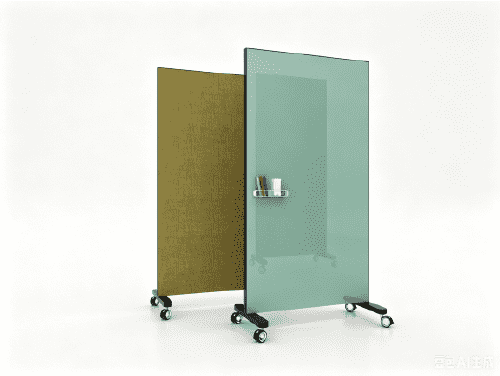
Office whiteboards remain an important category in office furniture and collaborative workspaces, but the product is undergoing notable structural changes. Traditional "wall-mounted whiteboards" are evolving toward "mobile, glass, furniture-integrated, magnetic, multifunctional, and space-dividing" solutions.
The current market can be divided into at least the following segments:
Wall-Mounted Whiteboard → Mobile Whiteboard → Glass Whiteboard → Whiteboard Screen → Acoustic Whiteboard → Multifunctional Collaborative Board
According to the latest third-party market research in 2026, the global whiteboard market is estimated at approximately $3.83 billion, with a projected CAGR of 6.4% from 2026 to 2033. Its segmentation includes Wall-Mounted, Mobile, Glass, Desktop/Portable, etc., of which the U.S. accounts for about 25.4% of the global market. By simple conversion based on this report, the U.S. market is roughly $970 million, but this figure includes schools, households, healthcare, government, and other scenarios—not purely the office furniture market—so it can only be used to gauge the market scale.In addition, office whiteboards are facing competition from digital collaboration devices. The U.S. Interactive Whiteboard market is projected to reach about $1.088 billion in 2026 and is expected to grow to $1.703 billion by 2033, with a CAGR of approximately 6.6% from 2026 to 2033. This means traditional whiteboards will not disappear, but low-end ordinary whiteboards will increasingly be squeezed by digital collaboration tools and low-cost e-commerce products. Therefore, for Chinese office furniture companies, the most noteworthy segments are not ordinary steel whiteboards, but rather:
Mobile + Glass + Magnetic + Double-sided + Partition + Acoustic + Multifunctional
II. Whiteboard Product Market Structure
Office whiteboards can be divided into seven major product tiers.
Product Type | English Keywords | Key Features | Market Opportunity |
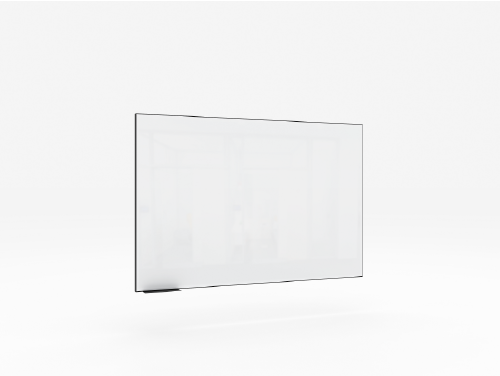
Wall-Mounted Whiteboard | Wall-Mounted Whiteboard | Traditional fixed | ★★★ |
Magnetic Whiteboard | Magnetic Whiteboard | Writing + Magnetic | ★★★★ |
Mobile Whiteboard | Mobile Whiteboard | Casters for mobility | ★★★★★ |
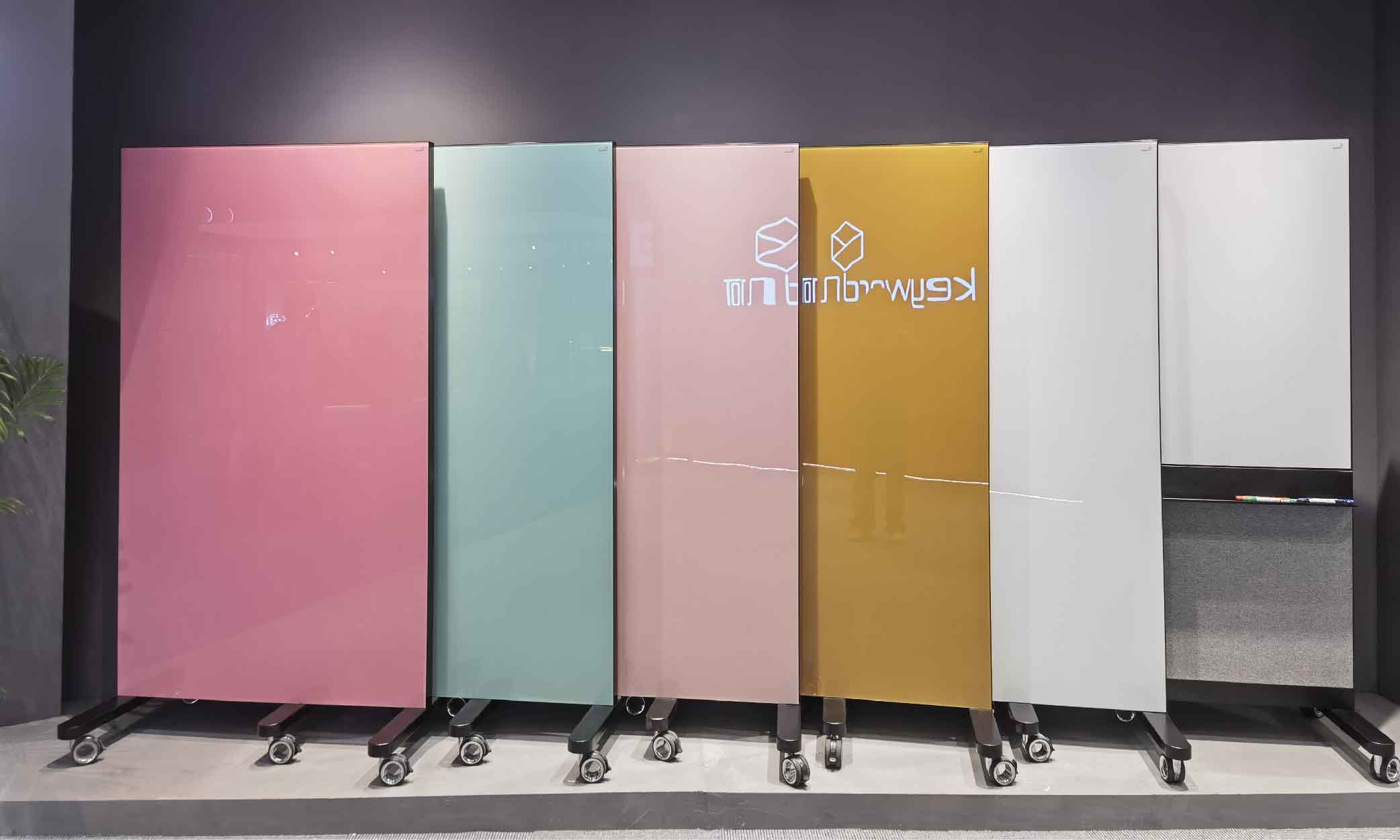
Glass Whiteboard | Glass Whiteboard | Premium, aesthetic, durable | ★★★★★ |
Mobile Glass Whiteboard | Mobile Glass Whiteboard | Premium + Mobility | ★★★★★ |
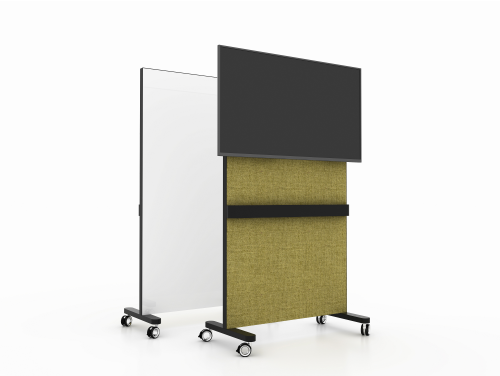
Whiteboard Screen | Whiteboard Screen | Writing + Space division | ★★★★★ |
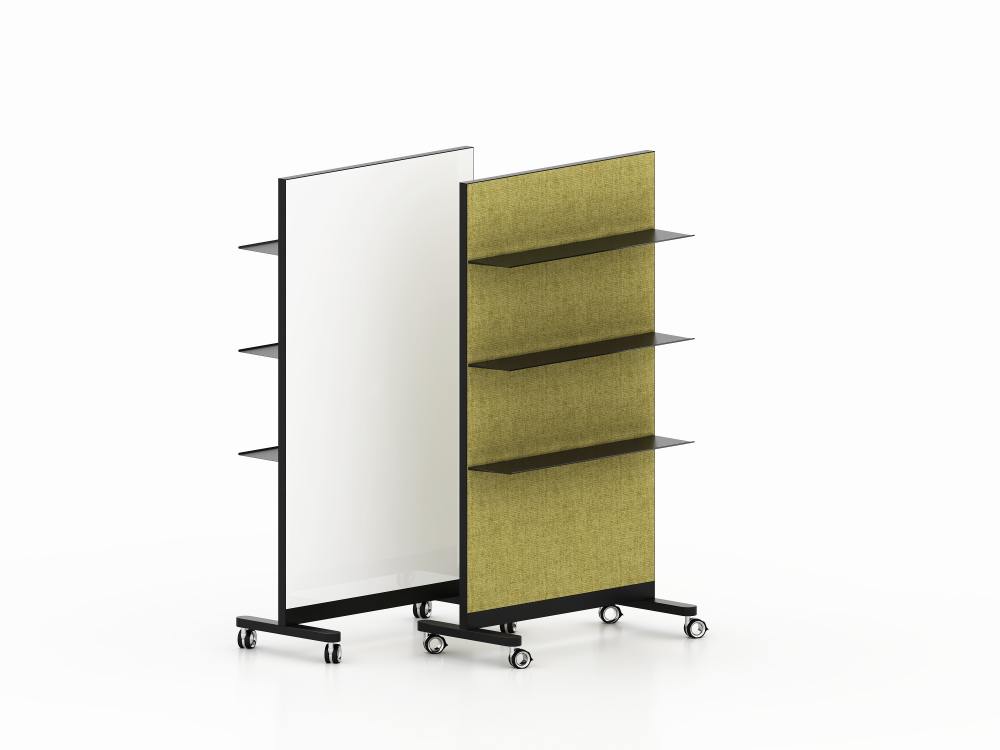
Multifunctional Collaborative Board | Multifunctional Whiteboard | Whiteboard + Storage + Screen, etc. | ★★★★★ |
III. Core Market Trends
Mobile Whiteboards are becoming a key growth direction. Offices are shifting from fixed spaces to: Flexible Workspace / Hybrid Work / Activity-Based Working. Therefore, furniture needs to be movable.
Steelcase's Groupwork series directly uses whiteboards for: Conference / Collaboration / Café / Lounge / Training, and offers casters, marker trays, flip-chart pegs, and other configurations. The product is not just a "writing board" but is integrated into the space as "collaborative furniture."
Vari's Mobile Glass Board also clearly positions its product for: Collaboration / Training / Meeting / Presentation / Movable Partition. Its top also includes a connection mechanism that allows multiple whiteboards to be linked together to form temporary partitions.
Thus: Mobile whiteboards are transitioning from office supplies to office furniture.
IV. Glass Whiteboards Are a Key Opportunity
Third-party industry data suggests that although Glass Whiteboards do not necessarily hold the largest overall market share, their growth rate is significantly higher than traditional products like Melamine. DataIntelo estimates that glass whiteboards accounted for about 8.4% of the overall market in 2025, but their projected CAGR from 2026 to 2034 is about 7.2%, compared to Melamine's 3.8%.
Why?
Because glass has distinct premium advantages:
Appearance – More suitable for: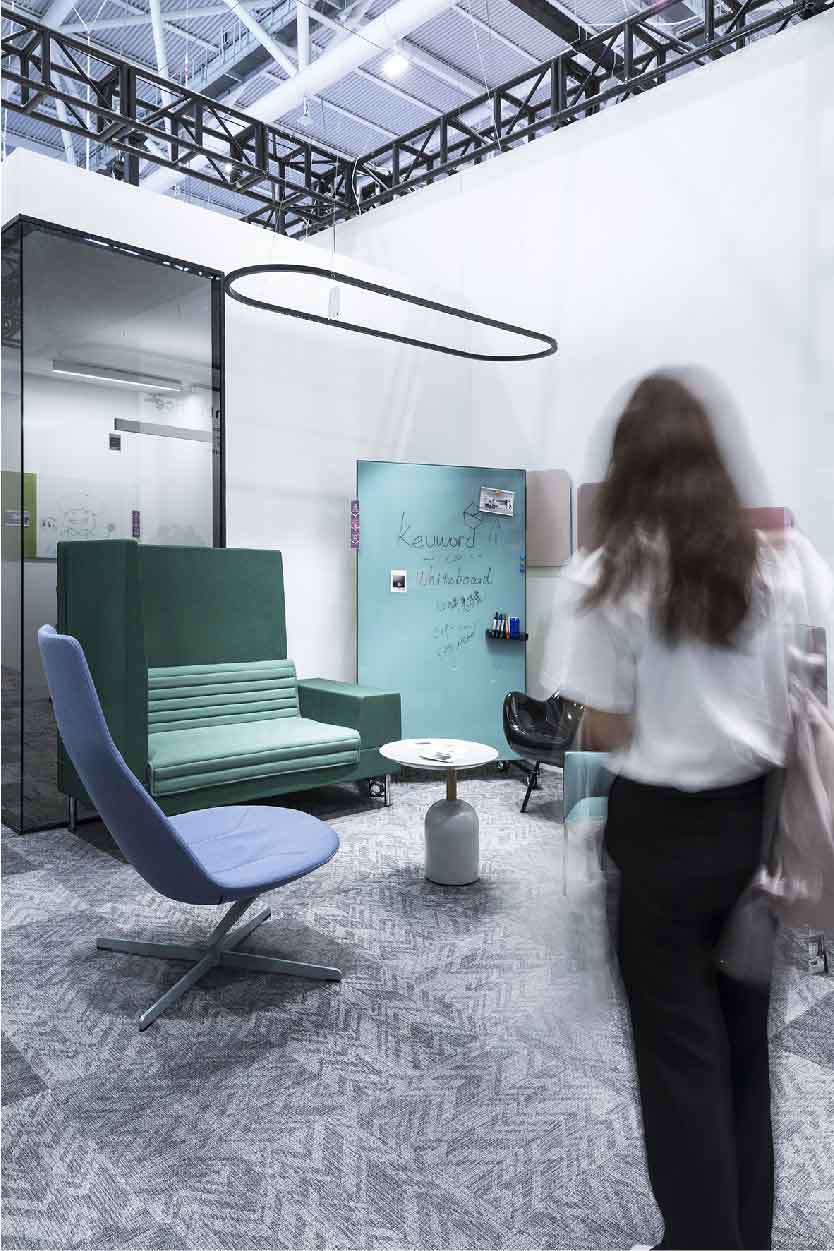
- Modern Office
- Executive Office
- Design Studio
- Meeting Room
- High-End Workspace
User Experience – Glass surface:
- Less prone to ghosting/staining compared to traditional whiteboards
- Easy to clean
- Long surface life
- Can support magnetic functionality
- Visually more premium
V. Why "Glass + Mobile" Is Worth Prioritizing
This is actually an excellent combination within the whiteboard category.
- Ordinary Whiteboard = Writing
- Mobile Whiteboard = Writing + Mobility
- Glass Whiteboard = Writing + Design
- Mobile Glass Whiteboard = Writing + Mobility + Design + Space Division
VI. Customer Pain Point Survey
A notable issue in the whiteboard category currently is:
① Product functionality is becoming increasingly homogeneous. Analysis of mobile whiteboards on Amazon U.S. shows that the market is already highly mature:
② Double-sided + Magnetic + Wheels have become basic configurations, leading to severe product homogenization and obvious price competition.
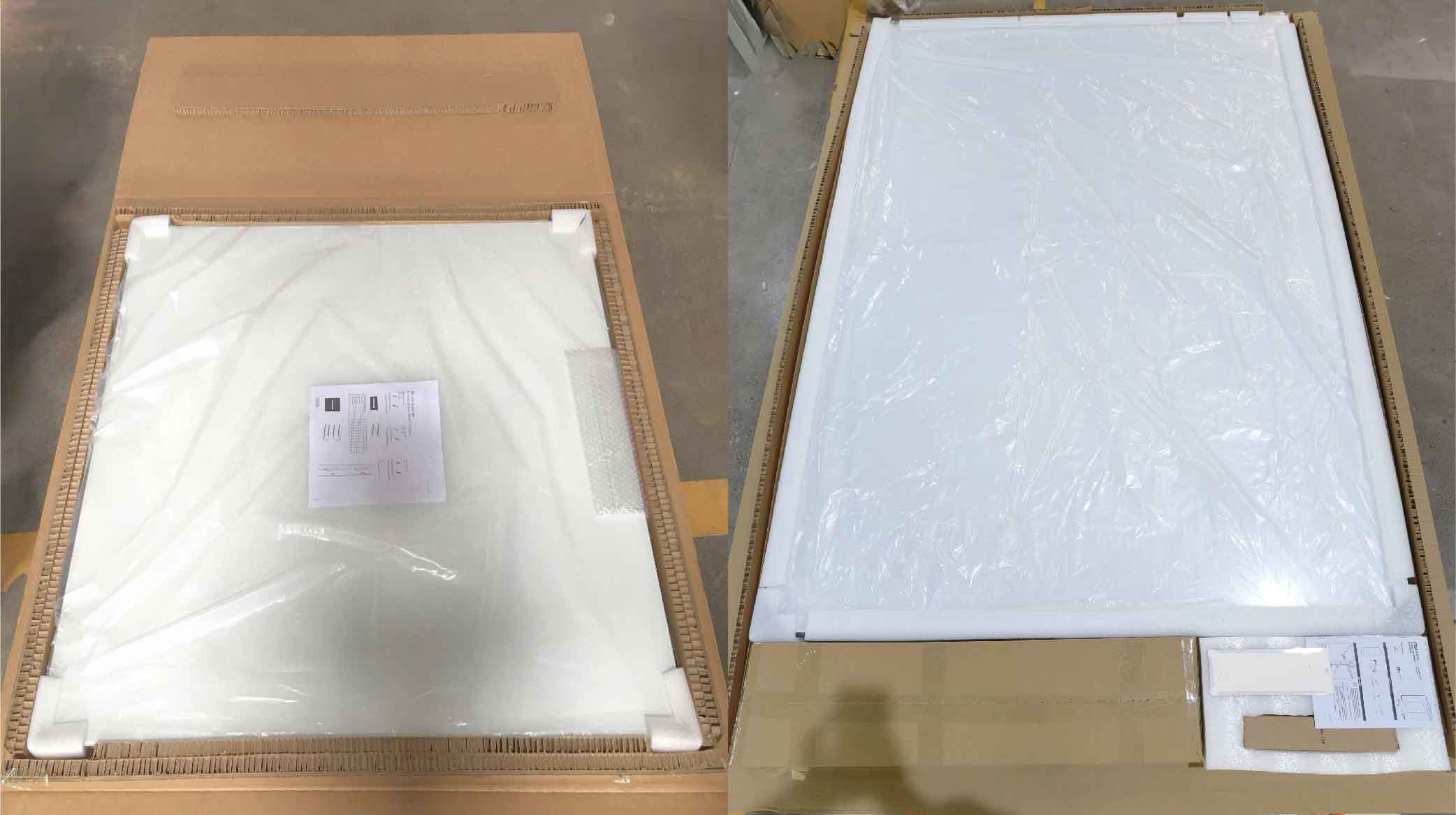
③ Issues include shipping damage, dents, scratches, poor accessory quality, and unsatisfactory marker/eraser experiences.
Therefore, potential differentiators for Chinese manufacturers could be:
1. Packaging: Ensure safe glass shipping
2. Casters: Smooth + quiet + stable locking
3. Frame: Avoid wobbling / deformation / squeaking
4. Assembly: Aim for tool-free / easy assembly
5. Accessories: Include marker + eraser + magnet + tray as standard, not cheap giveaways.
VII. Integration of Whiteboards and Office Screens
This is a very promising direction for the future. Clear market cases already exist.
- Steelcase Groupwork: Whiteboard + Screen + Casters
- Vari: Partition + Linking
- Lint: Acoustic Textile + Pinboard + Furniture
Thus, the product becomes: "Writing function + Space division function."
VIII. Target Customers
Customer | Needs |
Corporate Office | Collaboration |
Tech Company | Hybrid Collaboration |
Design Studio | Sketching |
Architect | Drawing |
Training Center | Teaching |
Coworking Space | Flexible space |
School | Teaching |
Government | Project procurement |
Hotel | Meeting |
Interior Designer | Space design |
Office Dealer | Bulk purchasing |
IX. Future Industry Trend Outlook
Over the next 3–5 years, I believe office whiteboards will evolve from "Whiteboard" toward "Collaboration Furniture."
Product evolution will likely follow:
Whiteboard
↓
Mobile Whiteboard
↓
Glass Whiteboard
↓
Mobile Glassboard
↓
Whiteboard Screen
↓
Acoustic Whiteboard
↓
Multifunctional Collaboration Wall
Ultimately, the product will increasingly resemble:
A movable office space infrastructure.
X. Final Conclusions
① Market Attractiveness
★★★★☆
The global whiteboard market continues to grow, with the U.S. being one of the largest single markets. Third-party 2026 data estimates the global market at about $3.83 billion, with the U.S. accounting for about 25.4%. "Melamine + Aluminum Frame + Casters" is highly susceptible to price wars.
② Glass Whiteboards
★★★★☆
Better suited for high-end office spaces, with clearly higher design value and pricing headroom.
③ Mobile Whiteboards
★★★★★
Aligned with the Hybrid Office and Flexible Workspace trends.
④ Whiteboard + Partition
★★★★★
Represents a product opportunity arising from the combination of office screens and whiteboards.
⑤ Whiteboard + Acoustic
★★★★★
Most worthy of focused research.
⑥ Whiteboard + Storage / Monitor / Planter
★★★★☆
Suitable as a premium product expansion.