
- 03 Sep 2026
Mobile Whiteboard: Why You Need a Rolling Whiteboard for a Flexible Workplace
A traditional whiteboard is useful for brainstorming, planning, meetings, teaching, and sharing ideas. But there is one major limitation: once it is mounted to a wall, it stays in one place.
What happens when your team needs the whiteboard somewhere else?
What if a meeting moves from a conference room to an open collaboration area? What if several teams need the same board during the day? Or what if you want to divide an open office into temporary project areas?
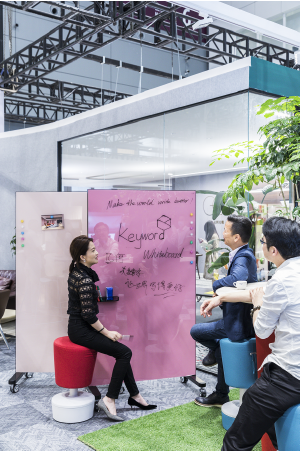
This is where a mobile whiteboard, also called a rolling whiteboard or whiteboard on wheels, can make a difference.
A mobile whiteboard gives teams the visual communication benefits of a traditional whiteboard while allowing them to move the workspace wherever collaboration is needed.
What Is a Mobile Whiteboard?
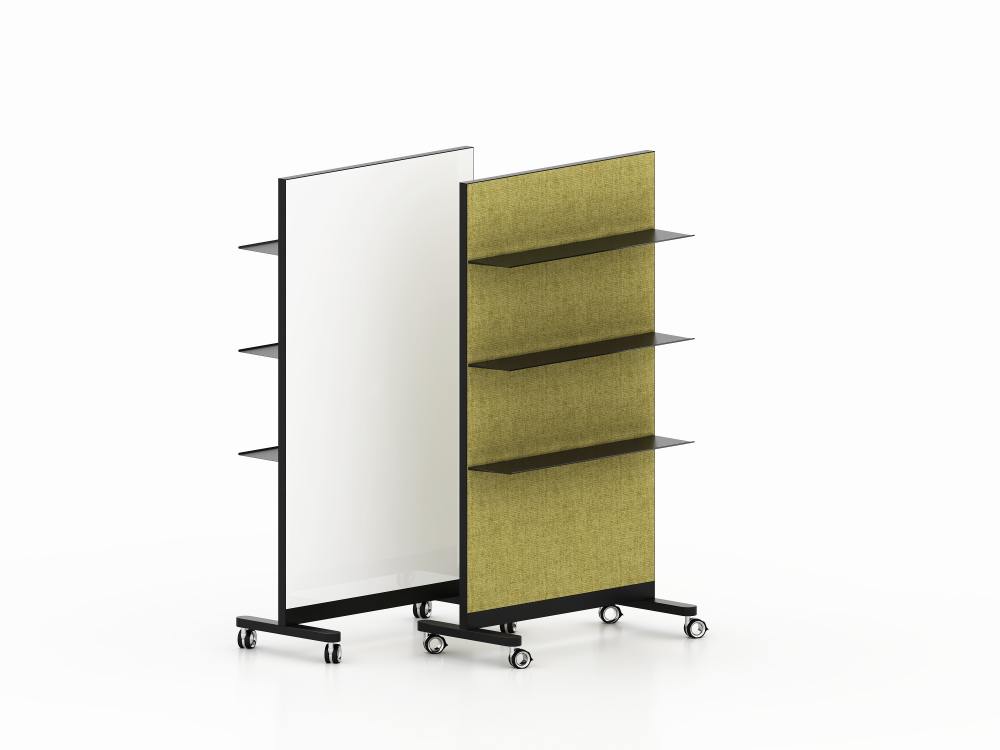
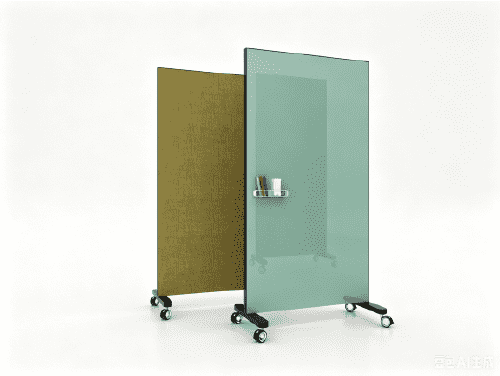
A mobile whiteboard is a freestanding whiteboard mounted on a movable frame with casters or wheels. Unlike a wall-mounted whiteboard, it can be moved between meeting rooms, workstations, classrooms, and collaboration areas. A rolling whiteboard is useful for flexible offices because it allows teams to bring a shared writing and brainstorming surface wherever collaboration is taking place.
A typical mobile whiteboard may include: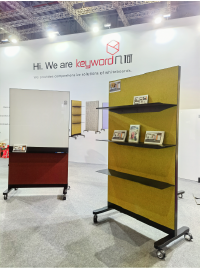
· A single-sided or double-sided writing surface
· Lockable casters
· Metal or aluminum framing
· A marker tray
· Magnetic writing capability
· Glass, porcelain, or coated writing surfaces
· Storage shelves
· Acoustic felt or fabric panels
The most important difference is simple:
A wall-mounted whiteboard determines where you work. A mobile whiteboard allows you to decide where the work happens.
Why Are More Workplaces Looking for Flexible Collaboration Tools?
Modern offices are dealing with several related problems: too many interruptions, inefficient meetings, information overload, and a growing need for flexible workspaces.
Microsoft’s 2025 Work Trend Index reported that employees are interrupted by a meeting, email, or notification approximately every two minutes during the workday, while 80% of the global workforce said they lacked enough time or energy to get their work done.
Atlassian research also found that 50% of workers in organizations with poor meeting cultures spend more time in unnecessary meetings than making progress on high-priority work.
These numbers point to a broader workplace problem:
Teams need simpler ways to collaborate, visualize information, and adapt their workspace without adding unnecessary complexity.
Meeting Inefficiency Is a Growing Workplace Problem
Meetings are supposed to help teams make decisions and move projects forward.
But when meetings become too frequent or poorly structured, they can consume the time needed for actual work.
A physical whiteboard can make meetings more action-oriented by giving teams a shared visual space for ideas, decisions, tasks, and deadlines.
Employees Need More Choice in Where They Work
Gensler’s 2024 Global Workplace Survey found that 94% of employees in exceptional workplaces have a choice in where they work within the office.
This suggests that flexible workplace design is not simply about providing desks.
Employees increasingly need access to different environments for focused work, collaboration, learning, meetings, and informal communication.
A mobile whiteboard can support this flexibility because it can move with the activity.
Open Offices Require More Flexible Space Solutions
Open-plan offices can improve communication and space efficiency, but they can also create challenges involving noise, distractions, and privacy.
A mobile whiteboard can help create a temporary visual boundary around a project team or collaboration area without requiring permanent construction.
What Should You Do When You Need to Move a Whiteboard?
If your team regularly needs a whiteboard in different places, a permanently mounted board quickly becomes restrictive.
A mobile whiteboard provides a much simpler workflow.
Unlock the casters, move the board to the desired location, position it, lock the wheels, and continue working.
There is no need to copy everything onto another board simply because the team changed rooms.
Move the Whiteboard to the Team
Instead of requiring everyone to gather around a fixed wall, the whiteboard can be moved to the team.
This is particularly useful for:
· Project planning
· Brainstorming
· Design reviews
· Sales meetings
· Agile workflows
· Training sessions
Move the Whiteboard Between Meeting Areas
A single rolling whiteboard can support multiple rooms or departments.
The same board can be used by a marketing team in the morning, a product team in the afternoon, and a training group later in the day.
Use a Mobile Whiteboard to Create Temporary Work Zones
A rolling whiteboard can also help define temporary spaces within an open office.
For example, several mobile boards can surround a project area to visually separate it from the rest of the workspace.
Once the project is finished, the boards can simply be moved elsewhere.
What Are the Benefits of a Mobile Whiteboard?
1. Bring Collaboration to the Team
The biggest benefit of a mobile whiteboard is flexibility.
The board can move to wherever collaboration is happening.
Instead of asking:
“Where is the whiteboard?”
the team can ask:
“Where should we work?”
That distinction becomes increasingly important in flexible workplaces.
2. Make Meetings More Visual and Action-Oriented
A rolling whiteboard can turn an abstract discussion into a visible workflow.
Teams can write:
Goals → Ideas → Decisions → Tasks → Owners → Deadlines
This creates a shared reference point that everyone can see during the discussion.
The board can remain visible after the meeting as a reminder of what was agreed upon.
3. Create Flexible Collaboration Areas
A mobile whiteboard can help turn an ordinary workspace into a temporary meeting or brainstorming area.
Move the board next to a desk cluster and you have a collaboration zone.
Move it beside a meeting table and you have a presentation surface.
Move it between two teams and it can become a shared planning board.
4. Share One Whiteboard Across Multiple Teams
Fixed whiteboards are permanently tied to individual rooms.
A rolling whiteboard is a shared resource.
One board can move across departments according to demand.
This can be particularly useful for organizations with limited meeting rooms or shared office facilities.
5. Support Open-Plan Office Design
Mobile whiteboards can also contribute to flexible office planning.
They can visually define areas for:
· Brainstorming
· Project work
· Informal meetings
· Training
· Presentations
Unlike permanent partitions, mobile boards can be repositioned as the office changes.
6. Improve Information Visibility
Atlassian found that 55% of knowledge workers surveyed have difficulty finding information even when they know someone inside their organization has it.
A whiteboard cannot replace a digital knowledge-management system, but it can help keep important project information visible at the point of work.
Teams can display:
· Project objectives
· Current priorities
· Task ownership
· Key deadlines
· Workflow stages
· Open questions
· Meeting decisions
7. Support Hybrid and Flexible Work
Flexible work means the same physical space may need to support very different activities throughout the day.
A mobile whiteboard can move between:
Meeting → Brainstorming → Training → Project Planning → Presentation
The physical workspace becomes easier to reconfigure without changing the building itself.
Mobile Whiteboard vs. Traditional Wall-Mounted Whiteboard
Both options can be useful.
The right choice depends on how the space is used.
Feature | Wall-Mounted Whiteboard | Mobile Whiteboard |
Mobility | No | Yes |
Wall installation | Required | Usually not required |
Can serve multiple rooms | Limited | Yes |
Temporary space planning | Limited | Yes |
Easy to reposition | No | Yes |
Shared between teams | Limited | High |
Flexible office applications | Moderate | High |
Storage integration | Limited | Often available |
When a Wall-Mounted Whiteboard Makes Sense
A wall-mounted whiteboard may be the better choice when:
· The board will stay in one room
· The room has a dedicated function
· Users rarely change the layout
· Wall space is readily available
When a Mobile Whiteboard Is a Better Choice
A mobile whiteboard may be the better choice when:
· Teams work across multiple areas
· Office layouts change frequently
· Collaboration happens outside meeting rooms
· The office uses shared or flexible spaces
· One board needs to serve multiple teams
What Features Should You Look for in a Rolling Whiteboard?
Not every rolling whiteboard offers the same level of usability.
When choosing one, focus on how the product will actually be used.
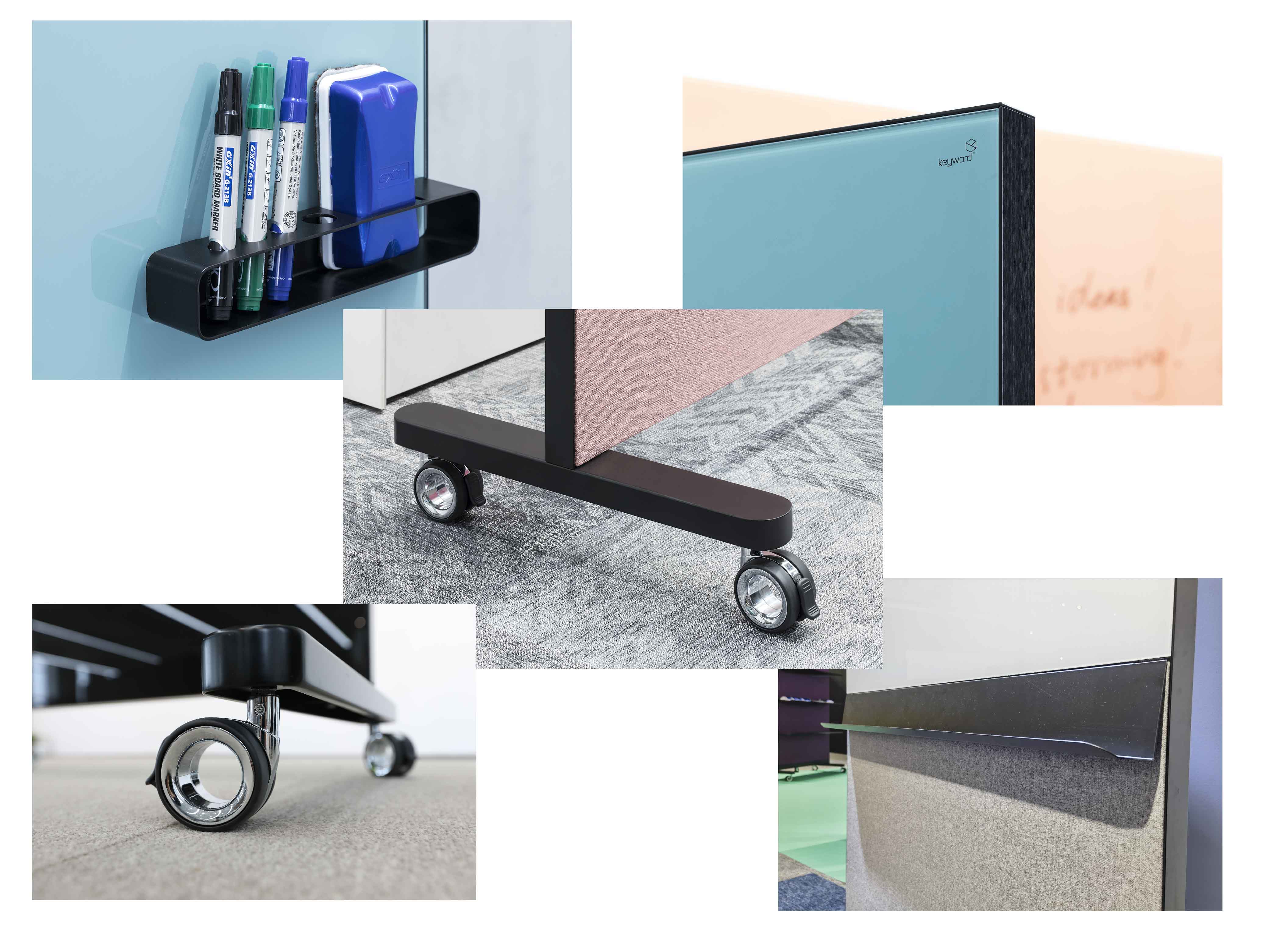
Lockable Casters
The casters should roll smoothly but also lock securely.
A board should be easy to move when needed and stable while people are writing.
Stable Frame and Base
A larger mobile whiteboard needs a stable supporting structure.
A well-balanced base helps minimize unwanted movement during writing.
High-Quality Writing Surface
For frequent use, pay attention to the surface’s durability, cleaning performance, and resistance to ghosting.
Glass and porcelain surfaces are common options for professional environments.
Magnetic Whiteboard Surface
A magnetic surface can make the board more versatile.
Teams can combine handwriting with:
· Printed documents
· Project cards
· Charts
· Photographs
· Sticky notes
Double-Sided Whiteboard Design
A double-sided mobile whiteboard can effectively provide two working surfaces in one product.
This can be useful for larger teams or longer brainstorming sessions.
Storage and Accessories
Marker trays, shelves, document holders, or integrated storage can make a mobile whiteboard more practical in daily use.
Acoustic or Felt Panel Integration
Some modern designs combine writing surfaces with PET felt or acoustic materials.
This can create a multi-functional product that supports both visual communication and workspace zoning.
Where Can You Use a Mobile Whiteboard?
Corporate Offices
Use a rolling whiteboard for strategy meetings, project planning, team discussions, and presentations.
Open-Plan Offices
Use mobile boards to create temporary work zones without installing permanent partitions.
Meeting Rooms
Move a whiteboard close to the meeting table so participants can capture ideas and decisions during discussions.
Training Rooms and Classrooms
Teachers and trainers can reposition the board according to different activities or group configurations.
Creative Studios
Designers, architects, marketers, and product teams can use mobile boards to visualize ideas and project information.
Coworking Spaces
A shared mobile whiteboard can serve different users without permanently occupying a single room.
How to Choose the Right Mobile Whiteboard for Your Office
Before buying a mobile whiteboard, think about the workflow first.
Consider the Available Space
Measure doorways, circulation paths, meeting areas, and storage locations.
A board that is difficult to move through the office will not provide much practical mobility.
Consider How Often the Whiteboard Will Move
If the board moves several times a day, caster quality becomes particularly important.
Consider Who Will Use It
A corporate project team may need a different configuration from a classroom, design studio, or executive office.
Consider What Information Needs to Be Displayed
Determine whether your team needs:
· Writing
· Magnetic documents
· Sticky notes
· Printed materials
· Project schedules
· Visual diagrams
Consider Whether You Need Multi-Functional Features
For some workplaces, the most useful solution may combine several functions:
Whiteboard + Pinboard + Acoustic Panel + Room Divider + Storage
This can provide more value than a basic writing surface alone.
Frequently Asked Questions About Mobile Whiteboards
What is a mobile whiteboard?
A mobile whiteboard is a freestanding whiteboard mounted on wheels or casters so it can be moved between different locations.
What is a rolling whiteboard?
A rolling whiteboard is another common term for a mobile whiteboard. The name emphasizes that the board can be moved using integrated wheels or casters.
Are mobile whiteboards better than wall-mounted whiteboards?
Neither is universally better. A wall-mounted whiteboard is suitable for permanent locations, while a mobile whiteboard is generally more suitable when flexibility and repositioning are important.
Can you use a mobile whiteboard as a room divider?
Some mobile whiteboards are specifically designed as multi-functional space dividers. Depending on the design, they can provide visual separation while also functioning as a writing surface.
Are rolling whiteboards good for meeting rooms?
Yes. A rolling whiteboard can be positioned close to participants during meetings and moved elsewhere when the room needs to support another activity.
What size mobile whiteboard should I buy?
The appropriate size depends on the available space, viewing distance, number of users, and amount of information that needs to be displayed. The board should be large enough for the workflow without restricting movement around the room.
Can a mobile whiteboard be used in an open-plan office?
Yes. Mobile whiteboards are particularly useful in open-plan offices because they can support brainstorming, visual communication, and temporary workspace zoning.
Final Thoughts: Why Mobile Whiteboards Are Useful for Flexible Workplaces
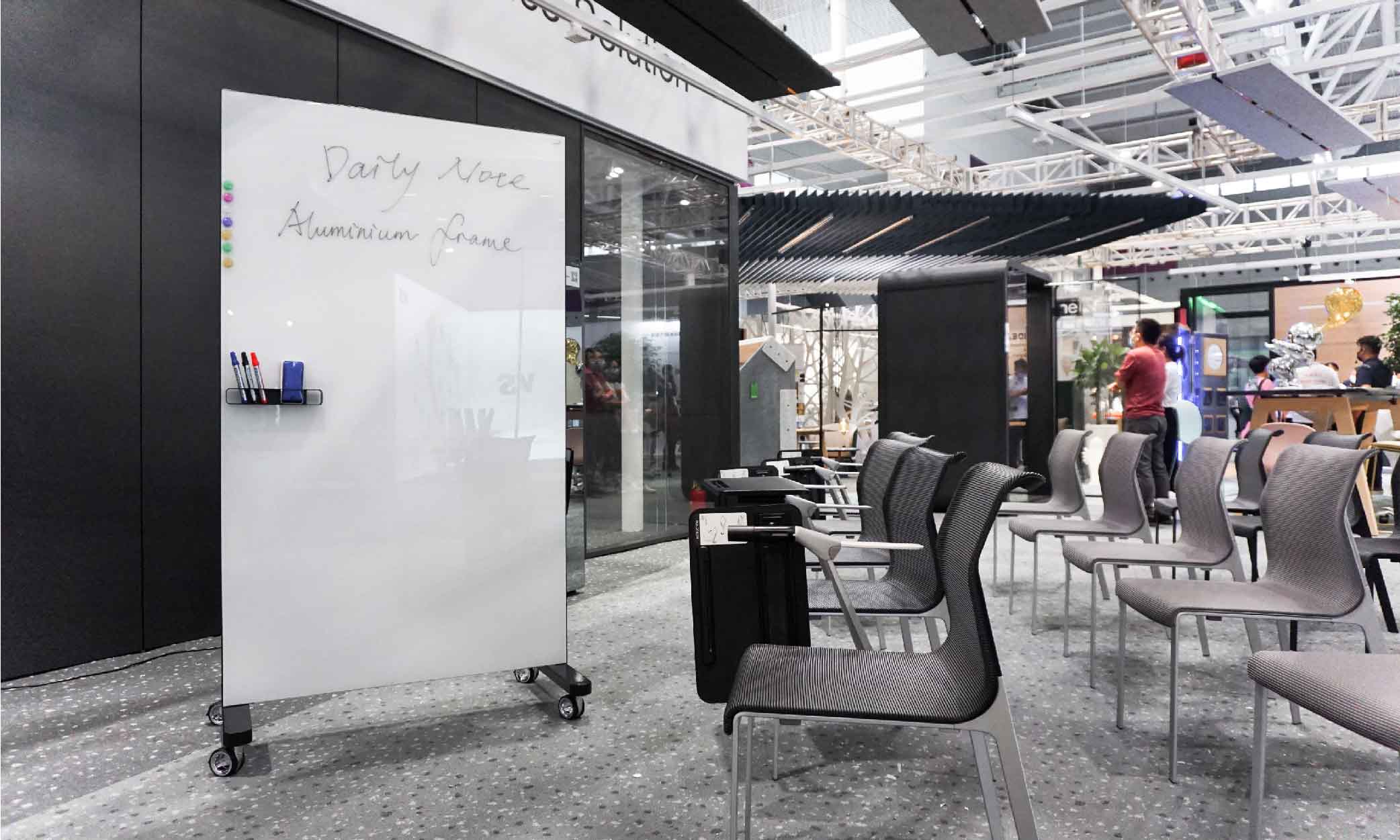
The value of a mobile whiteboard is not simply that it has wheels.
Its real value is flexibility.
Instead of permanently attaching a collaboration tool to a single wall, a rolling whiteboard allows teams to move the tool to the place where it is needed.
That can mean:
More flexible collaboration.
More adaptable meeting spaces.
Better visual communication.
More reusable workplace resources.
Greater freedom to configure the office around different activities.
As workplaces continue to evolve toward more flexible environments, the tools inside those workplaces need to become flexible as well.
A mobile whiteboard is a simple physical product, but it can play an important role in making the workplace easier to adapt.