
- 01 Sep 2026
Glass Whiteboard Advantages
Durability Anti-ghosting Easy Maintenance Modern Design Low TCO Hybrid-Ready
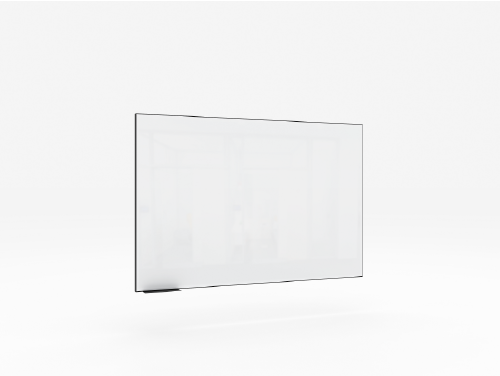
Glass Whiteboard Advantages: Why Tempered Glass Still Wins in Modern Offices
Discover the top advantages of glass whiteboards — durability, anti-ghosting, easy maintenance, and lower total cost of ownership — and learn how tempered glass whiteboards outperform traditional whiteboards in modern offices.
Introduction: The Paradox of the Digital Age
In an era dominated by digital collaboration tools, interactive flat panels, and AI-powered meeting assistants, the humble whiteboard seems like it should be obsolete. Yet the global glass whiteboard market is projected to grow from US$ 202 million in 2024 to US$ 332 million by 2031, at a CAGR of 7.5% (2025–2031). Another market analysis values the sector at USD 1.22 billion in 2025, forecasting USD 2.67 billion by 2034 at a 9.1% CAGR. This growth is no anomaly — it reflects a clear recognition that physical writing surfaces remain essential for cognition, collaboration, and creative work.
The paradox is straightforward: the more digitally connected we become, the more we value analog, tactile tools that anchor ideas in physical space. A glass whiteboard is not a relic of the pre-digital age; it is a thinking infrastructure that complements screens rather than competing with them.
This article unpacks the six core advantages of glass whiteboards, compares them against traditional and emerging alternatives, and provides a practical strategy for selecting and deploying them in modern offices.
Core Values and Benefits
Durability That Outlasts the Wall
Glass whiteboards are manufactured from tempered safety glass — a material heat-treated to increase surface strength and fracture resistance. tempered glass is up to ten times stronger than regular glass,. The tempered construction ensures the panel resists scratches, dents, and everyday impacts from pens, phones, or cables .
Traditional melamine or painted steel whiteboards, by contrast, wear down within 3–5 years in high-traffic environments, showing scratches, ghosting, and eventual chipping . A CeramicSteel writing wall, a premium alternative, is rated for 25+ years. Glass whiteboards sit at or above that lifespan, with many manufacturers describing them as boards that "outlast the length of the wall".
Anti-Ghosting and Non-Porous Surface
One of the most tangible advantages of a glass whiteboard is its non-porous composition. Because markers cannot sink into the surface, dry-erase ink wipes away cleanly without leaving permanent residue or "ghosting" — the faint outlines of old writing that plague traditional boards. As one user on Academia Stack Exchange noted, "glass is very smooth, you will never have stains accumulating like on a white board".
This non-porous property also makes glass whiteboards hygienic. The smooth surface tolerates alcohol-based cleaning and EPA List N disinfectants, reducing infection risk in shared meeting rooms — a post-pandemic priority for many organizations .
Effortless Maintenance
Daily cleaning requires nothing more than a microfiber cloth. For heavier marks, a mild alcohol-based or dedicated glass cleaner suffices; abrasive chemicals are unnecessary . The total maintenance burden is dramatically lower than for traditional whiteboards, which often require specialist stain restorers and periodic recoating . This simplicity extends the board's visual lifespan and reduces operational disruption.
Aesthetic Modernity and Brand Alignment
Glass whiteboards deliver a sleek, minimalist appearance that elevates professional spaces . Available in frameless designs, custom colours (black, white, blue, and even back-painted to match corporate branding), and large-format panels, they function as interior design elements as much as functional tools . In client-facing meeting rooms and collaborative hubs, the visual polish of a glass board signals modernity and attention to detail .
Versatile Functionality
Modern glass whiteboards extend far beyond simple writing:
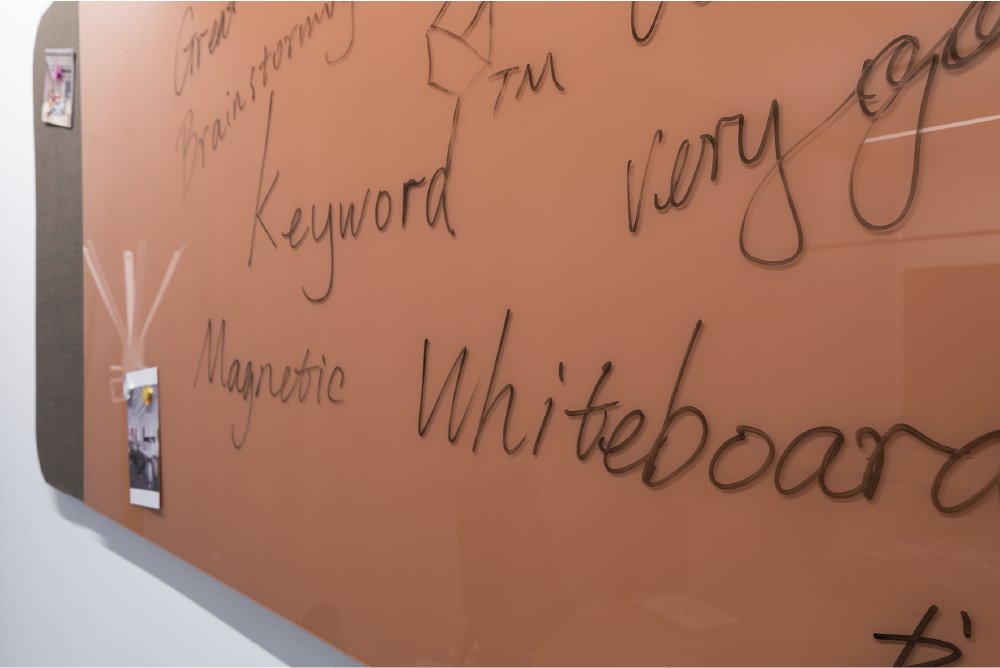
”Magnetic backing” — An embedded galvanized steel sheet allows users to pin documents, sprint backlogs, and planning overlays .
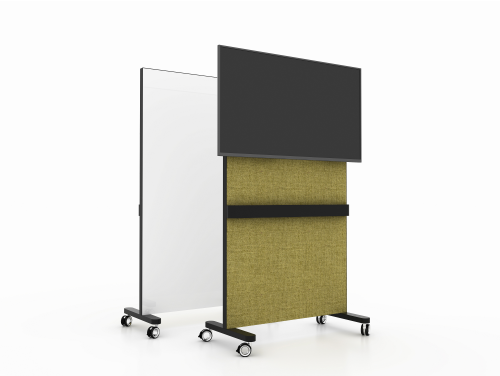
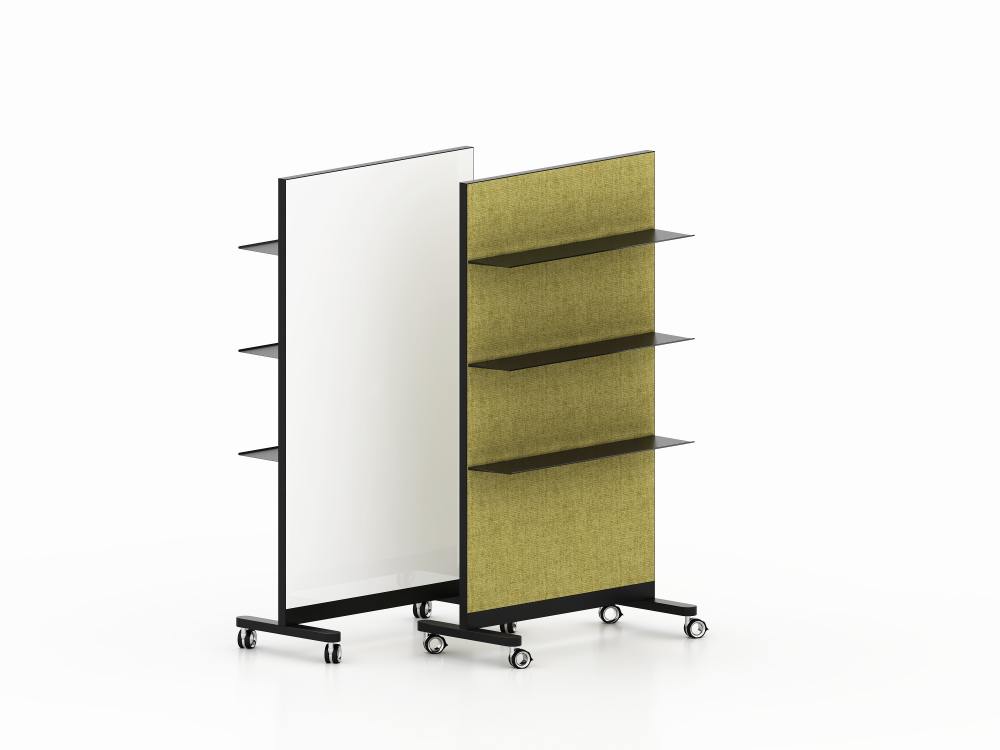
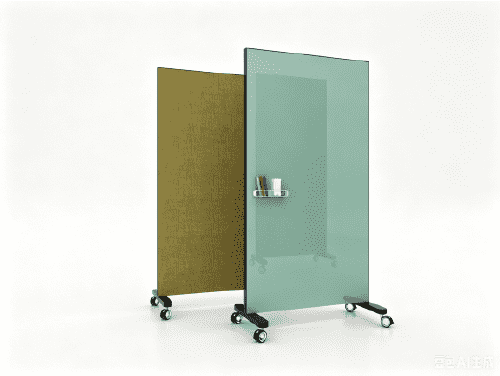
”Mobile configurations” — Wheeled stand-mounted panels enable reconfigurable spaces for agile teams .
”Projection compatibility” — The smooth, non-porous surface serves as a projection screen for hybrid meetings, eliminating the need for a separate screen .
”Custom sizing” — Manufacturers can produce panels in almost any dimension, from compact 600×900mm models to wall-to-wall installations .
Comparison with Alternatives
Feature | Glass Whiteboard | CeramicSteel | Digital Interactive Panel |
Upfront cost | Medium–High | Medium | High |
Lifespan | 25+ years | 25+ years | 5–8 years |
Magnetism | Good (with steel backing) | Excellent | N/A |
Projection | Excellent | Excellent | Built-in display |
Maintenance | Near-zero | Near-zero | Software/hardware upkeep |
Power required | None | None | Continuous |
10-Year TCO | Low | Low | High |
Glass vs. Traditional Whiteboards
The comparison between glass and traditional whiteboards favours glass on nearly every longevity and maintenance metric, with traditional boards retaining an edge only on initial purchase price . Melamine boards are adequate for low-use breakout rooms where budget is the primary constraint, but for daily-use meeting rooms and collaboration spaces, glass is the superior long-term investment .
Glass vs. Porcelain-on-Steel (CeramicSteel)
Porcelain-on-steel surfaces, such as Polyvision's E3 Ceramicsteel, are a premium alternative that shares many of glass's strengths — non-porous, never-ghosting, and projection-ready . E3 Ceramicsteel offers stronger magnetic hold and typically lower cost per square foot than tempered glass . However, glass whiteboards provide a broader range of aesthetic options, including transparent, tinted, and back-painted panels that can match interior design schemes more precisely . The choice often comes down to whether the priority is pure magnetic/projection utility (Ceramicsteel) or design flexibility and visual lightness (glass).
Glass Whiteboards vs. Digital Interactive Flat Panels
Digital interactive panels offer multimedia integration, cloud saving, and video conferencing — capabilities no analog board can match. However, they come with significantly higher costs, ongoing software subscriptions, power consumption, and electronic obsolescence cycles [12]. A glass whiteboard requires no electricity, no updates, and no subscriptions, and it avoids the "blue light" fatigue that some users experience during long brainstorming sessions. The most effective modern workspaces deploy both: digital tools for capture and distribution, glass whiteboards for ideation and real-time collaboration .
Strategy and Implementation
Selecting the Right Glass Whiteboard
Procurement teams should evaluate glass whiteboards along four decision axes :
1. “Size” — Choose larger formats (1200mm+) for team meeting rooms; compact models (600–900mm) suit personal desks and huddle spaces.
2. “Mounting type” — Fixed wall mounting saves space and provides a clean, permanent installation. Rail systems allow horizontal repositioning. Mobile stands with wheels enable agile reconfiguration.
3. “Magnetic requirement” — If pinning documents and plans is essential, select a magnetic glass panel with an embedded galvanized steel backing. Non-magnetic panels are cheaper and offer a lighter visual profile.
4. “Colour and finish” — Black and dark tones deliver a premium, modern look. White blends with any wall. Custom back-painting can match corporate brand colours.
Installation Best Practices
A common misconception is that glass whiteboards require a professional crew. In reality, installation takes about 15 minutes and requires two people . Always ensure mounting brackets attach directly to wall studs, CMU, or appropriate wall anchors — especially for larger panels . Use a level to align the board and verify that the standoffs or brackets are rated for the panel's weight (a 1200×900mm panel weighs approximately 14kg) .
Maintenance Routine
“Daily”: Wipe with a dry microfiber cloth.
”Weekly”: Use a damp cloth with water-diluted whiteboard cleaner for deeper cleaning.
”Monthly”: Isopropyl alcohol on a soft cloth for stubborn marks; avoid abrasive pads, cream cleaners, or bleach-based products .
”Long-term”: Periodically inspect mounting hardware and clean the frame grooves to prevent marker residue buildup.
Hybrid Work Deployment
In hybrid work environments, glass whiteboards serve as the physical anchor for distributed teams. Strategies include :
- Placing magnetic glass panels in collaboration zones where in-person participants can sketch ideas while remote colleagues view via camera.
- Using mobile glass whiteboards to create breakout areas during workshops, then repositioning them for standing meetings.
- Pairing glass boards with photo-sharing rituals — capturing whiteboard content and uploading it to the team's digital workspace at the end of each session.
Common Myths and How to Address Them
Myth 1: Glass Whiteboards Are Fragile and Dangerous
“Reality”: Tempered glass is engineered to be far stronger than annealed glass. It is heat-treated to increase strength and, when broken, shatters into small, blunt fragments rather than dangerous shards, meeting ASTM C1048 tempered glass safety standards . Multiple manufacturers describe their boards as practically indestructible under normal office use .
Myth 2: Glass Whiteboards Are Too Expensive
Reality: The higher upfront cost is offset by a dramatically lower total cost of ownership. Over a 10-year period, the cumulative cost of replacing melamine boards, buying cleaning supplies, and paying for maintenance typically exceeds the one-time cost of a glass whiteboard . For any organization with daily meeting room usage, glass is the more economical choice over time .
Myth 3: Glass Requires Special Cleaning Products
Reality: A dry microfiber cloth is sufficient for 90% of daily cleaning. For stubborn marks, isopropyl alcohol on a soft cloth works perfectly. Abrasive pads, cream cleaners, and bleach-based products should be avoided — but these are the products to *avoid*, not the ones to *use* .
Myth 4: Digital Tools Have Made Whiteboards Obsolete
Reality: The data contradicts this. The glass whiteboard market is growing at 7.5%–9.1% CAGR precisely because organizations recognize that analog and digital tools are complementary, not competing . The most effective workflows use glass for ideation and real-time collaboration, and digital tools for capture, sharing, and archiving .
Conclusion: Whiteboard as Thinking Infrastructure
The advantages of glass whiteboards are not marginal improvements over traditional boards — they are step-change upgrades in durability, maintenance, hygiene, aesthetics, and total cost of ownership. As the market data confirms, organizations across every region are investing in glass whiteboards as part of a broader strategy to create spaces that support deep thinking, spontaneous collaboration, and lasting impressions .
In a world that is increasingly digital, the glass whiteboard occupies a uniquely valuable position: it is analog, but it is not outdated. It is a tool for thinking, not merely for recording. And that distinction — between thinking infrastructure and storage infrastructure — is exactly why glass whiteboards continue to matter.